Showing posts with label MEFT. Show all posts

29 January 2026

Namibia to increase National Park entrance fees from 01 April 2026: What visitors need to know!

last updated 29 January 2026 

Namibia will introduce a revised national park entrance and conservation fee structure from 01 April 2026, marking the first major adjustment to park fees since 2021. The updated fees apply across most national parks and reserves managed by the Ministry of Environment, Forestry and Tourism (MEFT) and will primarily affect international (non-Namibian, non-SADC) visitors.

According to the newly published fee schedule, Namibia's flagship and premium national parks will see the most significant increases. These changes align Namibia's conservation fees more closely with those charged in neighbouring Southern African destinations and are intended to support long-term conservation funding.

Premium National Parks: New Fees from 01 April 2026

For premium national parks, the total daily park fee for international adult visitors will increase from N$150 to N$280 per person per day.

Parks affected include:

Adult visitors (16 years and older)

  • Namibians: N$30 park entrance + N$30 conservation = N$60
  • SADC nationals: N$90 + N$90 = N$180
  • Other foreign nationals: N$140 + N$140 = N$280

Children (9–15 years)

  • Namibians: No fee
  • SADC nationals: N$50 + N$50 = N$100
  • Other foreign nationals: N$90 + N$90 = N$180

Children under 8 years of age enter free of charge.

Vehicle fees (per day)

  • Vehicles with 10 seats or less: N$60
  • 11–25 seats: N$150
  • 26–50 seats: N$600
  • 51+ seats: N$1,000

Example:
A visit to Etosha National Park for two international adults in a standard vehicle will increase from N$350 to N$620 per day from April 2026.

Standard National Parks: Fees Also Doubling

Namibia  will also double entrance fees at remaining national parks and smaller reserves, with international adult rates rising from N$100 to N$200 per day.

Parks affected include:

  • Bwabwata National Park
  • Mudumu National Park
  • Khaudum National Park
  • Nkasa Rupara National Park
  • Mangetti National Park
  • Popa Falls Game Park
  • Daan Viljoen Game Park
  • Hardap Game Park
  • Naute Game Park
  • Von Bach Game Park
  • South West Nature Reserve

Adult visitors (16 years and older)

  • Namibians: N$20 + N$20 = N$40
  • SADC nationals: N$65 + N$65 = N$130
  • Other foreign nationals: N$100 + N$100 = N$200

Children (9–15 years)

  • Namibians: No fee
  • SADC nationals: N$40 + N$40 = N$80
  • Other foreign nationals: N$75 + N$75 = N$150

Children under 8 years remain free of charge.

Vehicle fees for these parks remain identical to the premium park structure.

Sandwich Harbour exempt from fee increases

According to a report by the Windhoek Express (August 2025), Sandwich Harbour, although geographically part of the Namib-Naukluft National Park, will be exempt from the new park fee increases. The area is set to be formally designated as a concession area, meaning access will continue to be regulated through licensed tour operators rather than standard park entrance fees.

Context: Why the Increase Matters

While the new fees represent a notable rise - particularly for international visitors - it is important to note that:

  • The previous fee increase occurred in 2021, five years earlier.
  • Even after the adjustment, Namibia's  park fees remain competitive within the Southern African region.
  • The revised structure supports conservation funding, park management, and infrastructure maintenance in one of Africa’s most extensive protected-area networks.

26 April 2024

Namibia: Sufficient water in the Fish River Canyon for the upcoming hiking season!

The Namibian Ministry of Environment, Forestry and Tourism (MEFT), in collaboration with Namibia Wildlife Resorts (NWR), have announced that there is sufficient water in the Fish River Canyon for the upcoming hiking season (01 May 2024 - 15 September 2024 (?)). Like in the previous year, in which the water levels in the canyon were lower than expected due to the low rainfall season in the south of Namibia, water marshals will be stationed at strategic points along the hiking routes, including King Palace and Bushy Corner, to ensure the safety and well-being of all hikers.
The Fish River Canyon forms part of the |Ai-|Ais/Richtersveld Transfrontier Park, a peace park straddling the border between South Africa and Namibia. It is the largest canyon in Africa and the second largest canyon in the world after the Grand Cayon in the Fish River Canyon hiking trail is a 4-5 day guided or unguided hike with a total length of 86 km.

10 April 2024

Namibia: Major upgrade projects in Etosha National Park and Hardap National Park! [update #2]

update (07 August 2024): According to the Executive Director of the Ministry of Environment, Forestry, and Tourism, Teofilus Nghitila, as quoted in the online edition of "New Era",  nearly N$50 million will be used during this financial year to revamp the three major entrance gates to Etosha, as well as ablution facilities and other infrastructure of the ministry in the Hardap region.

update (06 August 2024): According to the Executive Director of the Ministry of Environment, Forestry, and Tourism, Teofilus Nghitila, as quoted by the Namibian Broadcasting Corporation (NBC), the new entry park gates, such as the Ombika gate, are also receiving facelifts and are expected to be completed by September 2024.

The Namibian Ministry of Environment, Forestry and Tourism (MEFT) has announced that it is currently engaged in the renovation of three of the four main entrance gates to Etosha National Park. Anderson Gate on the southern end of the National Park, Von Lidquist Gate in the east and King Nehale Lya Mpingana Gate is in the northern end of Etosha National Park will receive a total face lift. Renovations have already started at Anderson Gate. The MEFT further announced that in addition to the three entrance gates, eight sanitation facilites will be upgraded to "comfort stops", consisting of toilets, picnic areas, information displays, viewing platforms and adequate parking areas. All facilities will be safely enclosed. The eight sanitation facilities are Olifantsbad, Homob, Thatch Roof, Okerfontein, Andoni, Sprokieswood, Springbokfontein and Sonderkop. Two new "comfort stops" will be contructed at the M'Bari waterhole (Ozonjuitji m'Bari), located along the road between Okaukuejo Rest Camp and Dolomite Camp.
The entire renovation project in Etosha National Park is expected to be completed by July 2025 and to cost N$40.7 million.

Hardap National Park in Namibia's southern Hardap Region will also receive a face lift. According to the MEFT, the three existing entrance gates to the National Park (Main Gate, Fish Route Gate and Game Park Gate), as well as two existing ablution facilities or picnic spots (Lorralei (Lorelei?) and Bakvis) will be upgraded. In addition, four new ablution and picnic spots will get constructed.
The entire renovation project in Hardap National Park is expected to cost N$7.2 million.

Both projects are financed by the Government of Namibia (NamParks V Project) and co-financed by the Goverment of Germany (KfW Bank). [src.]

02 April 2024

Namibia: New rhino poaching figures!

According to the Namibian Ministry of Environment, Forestry, and Tourism (MEFT), Namibia has lost 19 black rhinos and nine white rhinos to poaching the first three month of 2024. Out of these 28 rhinos, 19 were poached in the Etosha National Park, of which 10 were found during a campaign in March 2024 to dehorn rhinos to reduce the risk of them becoming poaching targets. Five rhinos were killed on private farms in Namibia, three rhinos were poached in rhino custodianship farms, and one in the Kunene region. 


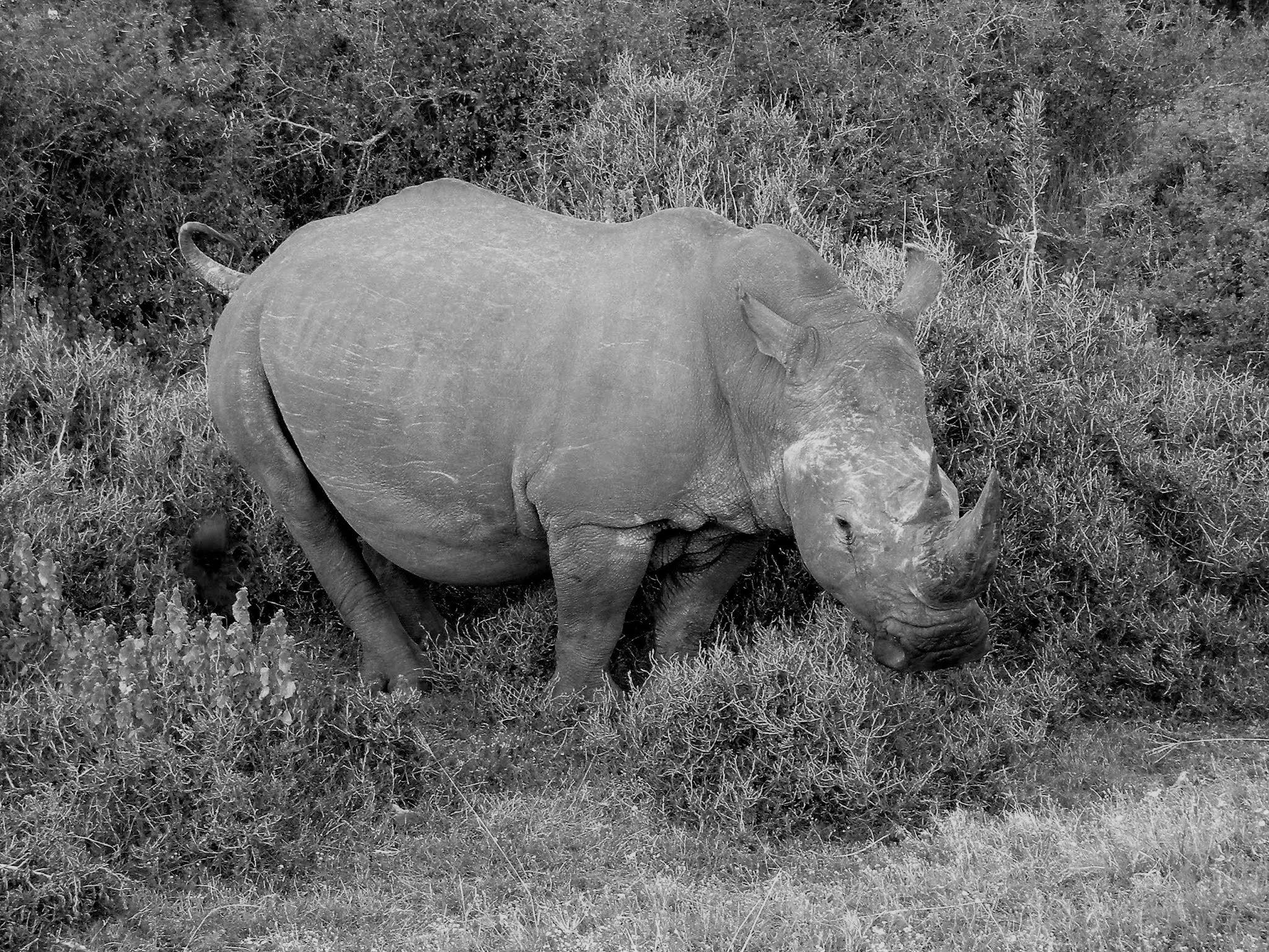
Namibia is home to a third of the entire remaining population of back rhino on the planet and the second largest white rhino population in the world after South Africa. The country also has the largest population of free-roaming black rhinos as well as the largest population of black rhinos in protected areas.

05 March 2024

Namibia released rhino & elephant poaching statistics for 2023!

The Namibian Ministry of Environment, Forestry and Tourism (MEFT) has released the rhino and elephant poaching numbers for 2023. According to the figures, Namibia lost 67 rhinos and eight elephants in the last year, compared to 92 rhinos and four elephants that lost their lives to poaching activities during 2022. Over the past 10 years, Namibia has documented a total of 631 poaching incidents, with the highest numbers reported in 2022. In 2023, Namibia registered 50 cases related to rhino and elephant poaching, leading to the arrest of 139 suspects.

Namibia is home to a third of the entire remaining population of back rhino on the planet and the second largest white rhino population in the world after South Africa. The country also has the largest population of free-roaming black rhinos as well as the largest population of black rhinos in protected areas. 

26 April 2023

Namibia: Water levels in the Fish River Canyon lower than expected!

The Namibian Ministry of Environment, Forestry and Tourism (MEFT) has recenetly conducted an assessment of the Fish River Canyon. According to the findings of the assessment, the water levels in the canyon are currently lower than expected due to the low rainfall season in the south of Namibia. In light of this, Namibia Wildlife Resorts (NWR), the state-owned enterprise mandated to run the tourism facilities within the protected areas of Namibia, has annouced that water marshalls will be deployed in the Fish River Canyon to assist hikers during the hiking season (01 May 2023 - 15 September 2023?). The water marshalls will make sure that hikers have access to safe drinking water and will monitor water usage in the canyon.
NWR is further advising hikers to carry water purifying tablets during their hike to ensure that they have access to clean water all the times.

The Fish River Canyon forms part of the |Ai-|Ais/Richtersveld Transfrontier Park, a peace park straddling the border between South Africa and Namibia. It is the largest canyon in Africa and the second largest canyon in the world after the Grand Cayon in the Fish River Canyon hiking trail is a 4-5 day guided or unguided hike with a total length of 86 km

24 January 2023

Namibia released rhino & elephant poaching statistics for 2022! [update]

update (30 January 2023): According to an update on high-value species poaching in Namibia, the Ministry of Environment, Forestry, and Tourism (MEFT) announced that 87 rhinos were poached in 2022, including 61 black rhinos and 26 white rhinos. 15 rhinos were poached on rhino custodianship farms, another 25 on white rhino private farms, and 46 in Etosha National Park. The four elephants, that Namibia lost to poaching activities, were killed in the Zambezi Region (2), the Kavango West Region (1) and the Kunene Region (1). 

The Namibian Ministry of Environment, Forestry and Tourism (MEFT) has released the rhino and elephant poaching numbers for 2022. According to the figures, Namibia lost 77 rhinos and four elephants in the last year, compared to 45  rhinos and 10 elephants that lost their lives to poaching activities during 2021. The rhino poaching statistics of 2022 is the third highest recorded since 2013.
In 2022, a total of 43 rhinos were poached in Namibia, while 61 were killed in 2019, 55 in 2017, 66 in 2016, 56 in 2014 and 9 in 2013. 12 elephants were poached in Namibia in 2020, while 13 elephants were killed by poachers in 2019, 27 in 2018, 50 in 2017, 101 in 2016, 49 in 2015 and 78 in 2014.

Namibia is home to a third of the entire remaining population of back rhino on the planet and the second largest white rhino population in the world after South Africa. The country also has the largest population of free-roaming black rhinos as well as the largest population of black rhinos in protected areas.

28 November 2022

Namibia: New rhino poaching figures!

According to the spokesperson of the Namibian Ministry of Environment, Forestry and Tourism (MEFT), Romeo Muyunda, Namibia has lost at least 63 rhinos to poaching, of which 41 are black rhinos and 22 are white rhinos, since the beginning of 2022. This year’s poaching cases include 26 rhinos poached in the Etosha National Park, 22 rhino on private farms and 15 rhinos on custodianship farms. Namibia recorded 44 (43?) rhinos poached in 2021, 42 in 2020, 57 in 2019, 83 in 2018, and 55 in 2017.

 
Romeo Muyunda further revealed that 106 suspects have been arrested since January 2022 in Namibia, of which 44 are linked to crimes related to rhino poaching and 62 to crimes related to elephant poaching. Out of 106 suspects, 93 are Namibians, eight are from Angola and five from Zambia.

Namibia is home to a third of the entire remaining population of back rhino on the planet and the second largest white rhino population in the world after South Africa. The country also has the largest population of free-roaming black rhinos as well as the largest population of black rhinos in protected areas.

01 September 2022

Namibia: New rhino poaching figures!

Namibia has recorded 48 cases of rhino poaching, of which 32 are black rhinos and 16 are white rhinos, since the beginning of 2022. According to the spokesperson of the Namibian Ministry of Environment, Forestry and Tourism (MEFT), Romeo Muyunda, 20 rhinos were poached in Etosha National Park, 12 black rhinos were poached on custodianship farms and 16 white rhinos were poached on private farms. The Etosha figures include three carcasses discovered in June 2022 and recently confirmed as poached after a thorough assessment in the National Park as well as two more carcasses that the MEFT discovered last week.
Namibia recorded 44 rhinos poached in 2021, 42 in 2020, 57 in 2019, 83 in 2018, and 55 in 2017.


Namibia is home to a third of the entire remaining population of back rhino on the planet and the second largest white rhino population in the world after South Africa. The country also has the largest population of free-roaming black rhinos as well as the largest population of black rhinos in protected areas.

05 August 2022

Namibia: New rhino and elephant poaching figures!

Namibia has recorded 33 cases of rhino poaching, of which 24 are black rhinos and nine are white rhinos, and two cases of elephant poaching since the beginning of 2022. According to the spokesperson of the Namibian Ministry of Environment, Forestry and Tourism (MEFT), Romeo Muyunda, this year’s poaching cases include nine black rhinos poached on custodianship farms, 15 black rhinos in the Etosha National Park, and another nine white rhinos on private farms.
Namibia recorded 44 rhinos poached in 2021, 42 in 2020, 57 in 2019, 83 in 2018, and 55 in 2017 as well as eight elephants poached in 2021, 12 in 2020, 13 in 2019, 27 in 2018 and 50 in 2017.


Namibia is home to a third of the entire remaining population of back rhino on the planet and the second largest white rhino population in the world after South Africa. The country also has the largest population of free-roaming black rhinos as well as the largest population of black rhinos in protected areas.